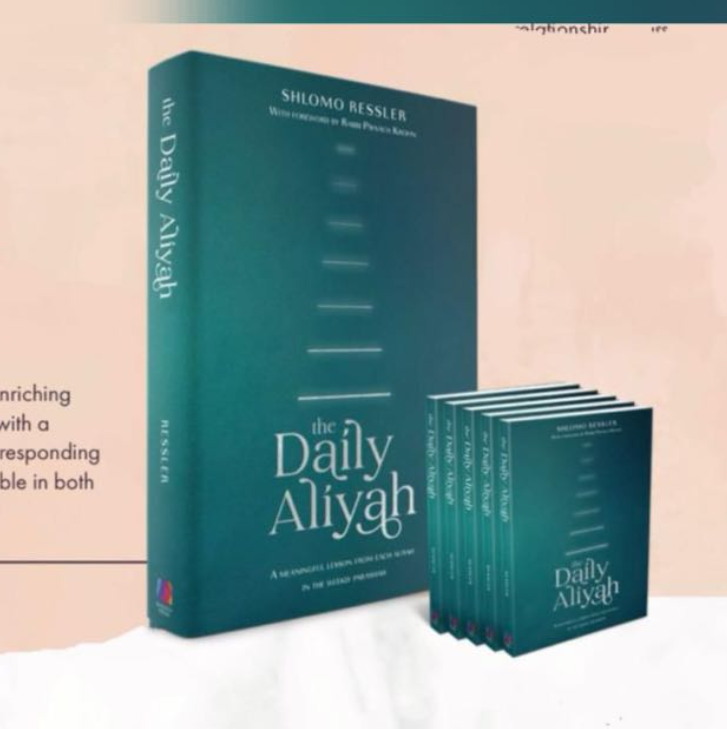
Daily Aliyah 4
Filtered WhatsApp · Special Edition
tap for pinned, media and shiurim
S Ressler
Tue, Jun 23 11:47 PM
Dvar Torah for Balak 4th Aliyah: Actual text: https://tinyurl.com/mvzyevjb Audio: http://dailyaliyah.org/wp-content/uploads/2025/12/balak-4.mp3 Among the several attempts by Bilam to curse the Jews, he distinctively commented, “I see them as mountain peaks, and I behold them as hills; it is a singular nation that will not be counted among the nations” (23:9). In what way are we different from other nations? Rav Elchanan Wasserman explains that there is a difference between a nation (goy) and a p
…S Ressler
Wed, Jun 24 11:34 PM
Dvar Torah for Balak 5th Aliyah: Actual text: https://tinyurl.com/vf36872p Audio: http://dailyaliyah.org/wp-content/uploads/2025/12/balak-5.mp3 Balak moves Bilam to another location, where not all the Jews are visible, in order to attempt to curse them (23:13). Why would Balak suggest going to an obscure location if seeing whom you are cursing is seemingly essential? Be’er Mayim Chaim suggests that Balak’s tactic was to target just some Jews rather than the Jewish people collectively. Balak hope
…S Ressler
Fri, Jun 26 12:13 AM
Dvar Torah for Balak 6th Aliyah: Actual text: https://tinyurl.com/5xh3ymsk Audio: http://dailyaliyah.org/wp-content/uploads/2025/12/balak-6.mp3 When Balak’s first attempt to have Bilam curse the Jews failed, he suggested trying again from a different location (23:13). When that failed as well, he suggested moving to yet another location (23:27). Why would he think that moving locations would help? Rav Meir Tzvi Bergman explains that Balak arrogantly thought that the curses depended on his or Bil
…S Ressler
Fri, Jun 26 12:13 AM
Dvar Torah for Balak 7th Aliyah: Actual text: https://tinyurl.com/msr8akxd Audio: http://dailyaliyah.org/wp-content/uploads/2025/12/balak-7.mp3 Bilam ends up blessing the people, to the dismay of Balak. As a parting gift, Bilam offers Balak some advice on how to defeat the Jewish people, suggesting that Balak entice them with improper relationships with Midianite women (24:14, 31:16). In the very next perek, we see that his plan immediately works, causing the death of 24,000 people (25:1–9). How
…S Ressler
Sun, Jun 28 3:38 AM
Dvar Torah for Pinchas 1st Aliyah: Actual text: https://tinyurl.com/bdds8t67 Audio: http://dailyaliyah.org/wp-content/uploads/2025/12/pinchas-1.mp3 After a Jewish prince and a Midianite woman act immorally and are killed, God commands the Jewish people to “distress and defeat” the Midianites, “for they distress you with their plots” (25:17–18). What makes the Midianite threat distinct, and how does God’s response address it? The Ohr HaChaim explains that the Midianites posed a danger not only to
…S Ressler
Mon, Jun 29 2:25 AM
Dvar Torah for Pinchas 2nd Aliyah: Actual text: https://tinyurl.com/msuwu7my Audio: http://dailyaliyah.org/wp-content/uploads/2025/12/pinchas-2.mp3 Nestled within the latest census is an obscure mention: “And the name of Asher’s daughter was Serach” (26:46). Rashi points out that she was one of the original seventy people who entered Egypt, and she is mentioned here because she survived the 210 years in Egypt as well as the 40 years in the desert. While surviving all those years is certainly rem
…S Ressler
Mon, Jun 29 11:11 PM
Dvar Torah for Pinchas 3rd Aliyah: Actual text: https://tinyurl.com/3sd86hch Audio: http://dailyaliyah.org/wp-content/uploads/2025/12/pinchas-3.mp3 God instructs Moshe to divide the land among the tribes “…by lottery shall the land be divided, according to the names of their fathers’ tribes they shall inherit” (26:55). If the tribes are to inherit the land, why does the Torah add the extra word “names” to make it sound like the names are inheriting the land, rather than the people? Rav Hirsch ex
…Shlomo Ressler
Tue, Jun 30 10:27 PM
Dvar Torah for Pinchas 4th Aliyah: Actual text: https://tinyurl.com/3ubbmb79 Audio: http://dailyaliyah.org/wp-content/uploads/2025/12/pinchas-4.mp3 When Moshe is told that he will soon pass away, his first concern is to solicit God to appoint someone to take over as leader of the people (27:16). Moshe asks for someone who will “lead the Jewish people out and bring them in so that God’s congregation not be like sheep without their shepherd” (27:17). Why use the possessive “their”; why not say “li
…Shlomo Ressler
Wed, Jul 1 8:32 PM
Dvar Torah for Pinchas 5th Aliyah: Actual text: https://tinyurl.com/y6usamsk Audio: http://dailyaliyah.org/wp-content/uploads/2025/12/pinchas-5.mp3 The Torah details the offerings, beginning with the daily sacrifices (28:1–8) and continuing with the Shabbos and special occasion offerings (28:9–15). Nestled in the instructions for the daily offering is the phrase that “the continual offering will be done as Har Sinai, as a smell of satisfaction, a fire to God” (28:6). Considering that the daily o
…Shlomo Ressler
Thu, Jul 30 12:14 AM
Dvar Torah for Eikev 5th Aliyah: Actual text: https://tinyurl.com/4enpma66 Audio: http://dailyaliyah.org/wp-content/uploads/2026/01/eikev-5.mp3 In Parashas Eikev, Moshe reiterates God’s promises and warnings, contingent upon His people fulfilling what is required and expected of them. Moshe declares, “God, your God, is the God of gods and Lord of lords, the great, mighty, and awesome God,” and, in the very next pasuk, states, “He executes justice for the orphan and widow and loves the stranger,
…Shlomo Ressler
Fri, Jul 31 12:47 AM
Dvar Torah for Eikev 6th Aliyah: Actual text: https://tinyurl.com/m69su2ev Audio: http://dailyaliyah.org/wp-content/uploads/2026/01/eikev-6.mp3 Last week’s parashah included the first paragraph of Shema, instructing us to teach our children Torah. This week’s parashah seems to echo the same theme in the second paragraph of the Shema. Last week the Torah told us: “Teach your children, and speak the Torah while you sit at home, walk on the way, go to sleep and wake up” (6:7). This week’s instructi
…Shlomo Ressler
Fri, Jul 31 12:49 AM
Dvar Torah for Eikev 7th Aliyah: Actual text: https://tinyurl.com/2p8xwpva Audio: http://dailyaliyah.org/wp-content/uploads/2026/01/eikev-7.mp3 Moshe implores us to keep God’s commandments, do them, love God, walk in all His ways, and cleave to Him (11:22). What is the practical difference between these various modes of service? Rashi explains that walking in God’s ways means that when He is merciful, we are too, and when He is kind, so are we. Lekach Tov expounds on that thought and suggests th
…Shlomo Ressler
Sun, Aug 2 1:51 AM
Dvar Torah for Re'eh 1st Aliyah: Actual text: https://tinyurl.com/4nu2zwsf Audio: https://dailyaliyah.org/wp-content/uploads/2025/08/reeh-1.mp3 Moshe sets before the people a blessing and a curse with regard to keeping the commandments and states, “The blessing that you will heed the commandments” (11:27). Would it not be more appropriate to use the conditional “If you heed the commandments,” since both the blessing and the curse are presented as possible outcomes? Rav Hirsch suggests that obser
…Shlomo Ressler
Mon, Aug 3 1:16 AM
Dvar Torah for Re'eh 2nd Aliyah: Actual text: https://tinyurl.com/4twh37fd Audio: http://dailyaliyah.org/wp-content/uploads/2025/08/reeh-2.mp3 Moshe informs the people of the new laws that will be initiated once they enter Israel, including the requirement that only holy offerings be brought to the Beis Hamikdash (Temple) in Yerushalayim. However, the pasuk does not specify that the Mikdash will be in Yerushalayim; instead, it says “To the place that God will choose” (12:26). Why is Yerushalayim
…Shlomo Ressler
Tue, Aug 4 12:20 AM
Dvar Torah for Re'eh 3rd Aliyah: Actual text: https://tinyurl.com/fsjjd5pp Audio: http://dailyaliyah.org/wp-content/uploads/2025/08/reeh-3.mp3 Moshe warns the people that if an entire city turns to idolatry, it must be completely destroyed—its inhabitants killed, and the city never rebuilt (thankfully, this never occurred). The next verse then says that God will grant us compassion and be compassionate with us (13:18). At first glance, this reassurance seems late in coming—why speak of compassio
…Shlomo Ressler
Wed, Aug 5 1:09 AM
Dvar Torah for Re'eh 4th Aliyah: Actual text: https://tinyurl.com/2s49rn5p Audio: http://dailyaliyah.org/wp-content/uploads/2025/08/reeh-4.mp3 Parashas Re’eh lists the kosher and non-kosher animals and specifies the features that make animals kosher—that they chew their cud and have split hooves, the absence of which makes them non-kosher (14:6). The Torah lists several non-kosher animals that have one of the two requirements but lack the second. Rabbi Yissocher Frand asks why the Torah indicate
…Shlomo Ressler
Thu, Aug 6 1:52 AM
Dvar Torah for Re'eh 5th Aliyah: Actual text: https://tinyurl.com/yc57befd Audio: http://dailyaliyah.org/wp-content/uploads/2025/08/reeh-5.mp3 We are told each year to ma’aser (tithe) all our crops and earnings (14:22). The pasuk uses a double expression—asser t’asser—literally “tithe to tithe,” which many commentaries interpret as “tithe in order to become wealthy.” The K’sav Sofer asks how the second t’asser can be understood to mean wealth, when the Hebrew word for wealth is t’asher. He answe
…Shlomo Ressler
Fri, Aug 7 12:22 AM
Dvar Torah for Re'eh 6th Aliyah: Actual text: https://tinyurl.com/3dackr3v Audio: http://dailyaliyah.org/wp-content/uploads/2025/08/reeh-6.mp3 Parashas Re’eh includes the precepts of tithing and giving charity to those in need. The pasuk tells us that the result of helping those less fortunate is that we will be blessed (15:10). The Lekach Tov asks: Does it not make more sense to reserve the blessings for those less fortunate so that they would not need the help of others? The Lekach Tov answers
…Shlomo Ressler
Fri, Aug 7 12:23 AM
Dvar Torah for Re'eh 7th Aliyah: Actual text: https://tinyurl.com/8vxnbxj4 Audio: http://dailyaliyah.org/wp-content/uploads/2025/08/reeh-7-modified-.mp3 The parashah concludes with a recap of the major festivals (Pesach, Shavuos, Sukkos) and the pronouncement, “Every man as much as his hand can give based on what they have been given” (16:17). The K’sav Sofer wonders why the word “hand” is included in this proclamation. The K’sav Sofer suggests that exercising the act of physically giving with o
…Shlomo Ressler
Sun, Aug 9 2:03 AM
Dvar Torah for Shoftim 1st Aliyah: Actual text: https://tinyurl.com/y74uvtr2 Audio: http://dailyaliyah.org/wp-content/uploads/2025/08/shoftim-1.mp3 Among the rules for living in the Land is the prohibition against planting “an ashera, any tree, near the altar” (16:21). While it is understandable to forbid planting ashera trees associated with idol worship, why does the prohibition extend to any tree? Rabbi Alexander Zusia Friedman explains that this prohibition reflects the concern that trees mi
…Shlomo Ressler
Mon, Aug 10 1:02 AM
Dvar Torah for Shoftim 2nd Aliyah: Actual text: https://tinyurl.com/2exabw26 Audio: http://dailyaliyah.org/wp-content/uploads/2025/08/shoftim-2.mp3 Moshe lays out the rules for a Jewish king, including one striking command: he must write two Torah scrolls and keep one with him at all times. This constant companion isn’t just symbolic; it’s meant to remind the king to stay humble and loyal to G-d’s law (17:18–19). But if only someone with a heightened fear of G-d could even become king, why was t
…Shlomo Ressler
Tue, Aug 11 12:22 AM
Dvar Torah for Shoftim 3rd Aliyah: Actual text: https://tinyurl.com/2p8zrd48 Audio: http://dailyaliyah.org/wp-content/uploads/2025/08/shoftim-3.mp3 Although Kohanim do not receive a land inheritance, they are entitled to the shoulder, cheek, and intestines of certain sacrifices (18:1–3). Why are these specific sections of sacrifices gifted to the Kohanim? Rav Hirsch suggests that the three parts represent the dedications required of anyone offering a sacrifice—to improve one’s actions, speech, a
…Shlomo Ressler
Wed, Aug 12 12:15 AM
Dvar Torah for Shoftim 4th Aliyah: Actual text: https://tinyurl.com/mr452dan Audio: http://dailyaliyah.org/wp-content/uploads/2025/08/shoftim-4.mp3 After instructing us on the prohibitions against divination and other occult practices, we are instructed to be “wholehearted with the Lord your G-d” (18:13). This sentence doesn’t seem to follow the previous sentence so coherently, and it seems to be without any context. While the meaning of the principle itself seems self-evident, how do we achieve
…Shlomo Ressler
Wed, Aug 12 11:49 PM
Dvar Torah for Shoftim 5th Aliyah: Actual text: https://tinyurl.com/57w4cjcz Audio: http://dailyaliyah.org/wp-content/uploads/2025/08/shoftim-5.mp3 Among the many topics in Parashas Shoftim is the concept of cities of refuge for those who accidentally killed another person. The Torah explains that these cities prevent the “innocent blood” of the accidental killer from being spilled by the victim’s avenging family (19:10). But if the concern is avoiding the loss of innocent life, why not focus on
…Shlomo Ressler
Fri, Aug 14 1:54 AM
Dvar Torah for Shoftim 6th Aliyah: Actual text: https://tinyurl.com/2s3zu9pb Audio: http://dailyaliyah.org/wp-content/uploads/2025/08/shoftim-6.mp3 Moshe instructs the people on how to prepare for battle, urging them not to fear the enemy (20:1), and the Kohen echoes this message to the troops, again telling them not to fear (20:3). Why the repeated reminder? Lekach Tov explains that the battlefield also represents our personal struggles with self-improvement. Even after overcoming certain fears
…Shlomo Ressler
Fri, Aug 14 1:55 AM
Dvar Torah for Shoftim 7th Aliyah: Actual text: https://tinyurl.com/4cedauve Audio: http://dailyaliyah.org/wp-content/uploads/2025/08/shoftim-7.mp3 Parashas Shoftim outlines various rules of war, including the unique commandment to preserve fruit trees when besieging a city (20:19). Moshe adds what some interpret as a rhetorical question: “Is the tree of the field a man?” This is often understood as a reminder that trees cannot move out of harm’s way, urging us to be mindful of their limitations
…Shlomo Ressler
Sat, Aug 15 11:33 PM
Dvar Torah for Ki Setzei 1st Aliyah: Actual text: https://tinyurl.com/bdzesfj4 Audio: http://dailyaliyah.org/wp-content/uploads/2025/08/ki-setzei-1.mp3 Parashas Ki Setzei introduces the concept of a “wayward and rebellious son” (21:18–21). According to the Gemara, the qualifying conditions for a conviction are so onerous that, according to one opinion, it has never — nor will ever — happen. Why introduce a hypothetical situation that will never occur? Rav Hirsch explains that this hypothetical s
…Shlomo Ressler
Mon, Aug 17 2:27 AM
Dvar Torah for Ki Setzei 2nd Aliyah: Actual text: https://tinyurl.com/237bhsy9 Audio: http://dailyaliyah.org/wp-content/uploads/2025/08/ki-setzei-2.mp3 The Torah presents us with the unique commandment to send away a mother bird before taking her eggs (22:6). The reward given is “so that it should be good for you, and you should lengthen your days” (22:7). What is so distinctive about this command that a respective reward accompanies it? Quoting the Ramban, the K’sav Sofer explains that repeated
…Shlomo Ressler
Mon, Aug 17 11:44 PM
Dvar Torah for Ki Setzei 3rd Aliyah: Actual text: https://tinyurl.com/55vrtpxn Audio: http://dailyaliyah.org/wp-content/uploads/2025/08/ki-setzei-3.mp3 We are forever forbidden from mingling with the nations of Amon and Moav because they did not help us with simple bread and water as we exited Egypt and because they attempted to curse the Jews through Bilam (23:4–6). G-d goes on further to say that we may never even inquire about these nations’ welfare (23:7). Why are Amon and Moav’s actions so
…Shlomo Ressler
Wed, Aug 19 1:10 AM
Dvar Torah for Ki Setzei 4th Aliyah: Actual text: https://tinyurl.com/bd3pmph5 Audio: http://dailyaliyah.org/wp-content/uploads/2025/08/ki-setzei-4.mp3 When soldiers are dispatched to fight, they are to remain pure; the Torah describes those who encounter impure emissions as “not pure because of a nocturnal emission” (23:11). Since we know that the Torah does not waste words, what is the purpose of describing an impure soldier in so many words? Oznayim LaTorah suggests that it would not be appro
…Shlomo Ressler
Wed, Aug 19 10:55 PM
Dvar Torah for Ki Setzei 5th Aliyah: Actual text: https://tinyurl.com/ypyphxtd Audio: http://dailyaliyah.org/wp-content/uploads/2025/08/ki-setzei-5.mp3 The Torah details the right of field workers to eat from the produce they’re harvesting, specifying, “You may eat as many grapes as you desire until you are full” (23:25). Since this law applies to any type of produce, why does the Torah use grapes as the example (especially since grapes were more commonly drunk as wine than eaten as fruit)? Rav
…Shlomo Ressler
Sat, Aug 22 11:55 PM
Dvar Torah for Ki Savo 1st Aliyah: Actual text: https://tinyurl.com/e2nt4xeh Audio: http://dailyaliyah.org/wp-content/uploads/2025/08/ki-Savo-1.mp3 This week’s parashah introduces the rules of bikkurim, the first fruits that are brought to the Beis Hamikdash. The ceremony is scripted, including the farmer’s attestation, “I have declared to G-d that I came to the land that our forefathers were promised” (26:3). The Kohen then takes the basket of fruits, after which the farmer immediately “answers
…Shlomo Ressler
Mon, Aug 24 12:04 AM
Dvar Torah for Ki Savo 2nd Aliyah: Actual text: https://tinyurl.com/m3cxn3vk Audio: http://dailyaliyah.org/wp-content/uploads/2025/08/ki-Savo-2.mp3 At the conclusion of the three-year tithing cycle, the Torah instructs the farmer to distribute the required tithes to the Levi, stranger, orphan, widow, and poor. He then declares: “I have removed the sacred portion from the house, and I have given it” to its designated recipients; “I have not transgressed any of Your commandments, and I have not fo
…Shlomo Ressler
Thu, Aug 27 12:10 AM
Dvar Torah for Ki Savo 5th Aliyah: Actual text: https://tinyurl.com/mr452b58 Audio: http://dailyaliyah.org/wp-content/uploads/2025/08/ki-Savo-5.mp3 The Jewish people are divided, with six tribes representing blessings on one mountain (Gerizim) and the remaining six representing curses on another (Aivel) (27:12–13). Why did the people have to be divided such that half of them represented curses? Wouldn’t it have been better if everyone represented the blessings? Oznayim LaTorah suggests that the
…Shlomo Ressler
Fri, Aug 28 12:13 AM
Dvar Torah for Ki Savo 6th Aliyah: Actual text: https://tinyurl.com/bsyfzxey Audio: http://dailyaliyah.org/wp-content/uploads/2025/08/ki-Savo-6.mp3 Parashas Ki Savo describes the blessings bestowed upon those who follow the Torah’s laws and the curses that will befall those who don’t. The Torah lists the acts that would trigger the curses but then afterward seemingly undermines the causality by stating that the curses will befall us if we don’t serve G-d with happiness and gladness of heart (28:
…Shlomo Ressler
Fri, Aug 28 12:14 AM
Dvar Torah for Ki Savo 7th Aliyah: Actual text: https://tinyurl.com/3s5wfywz Audio: http://dailyaliyah.org/wp-content/uploads/2025/08/ki-Savo-7.mp3 Moshe reminds the Jews of miracles they witnessed in Egypt, the sea, and the desert. Moshe then follows with the statement that “G-d did not give you a heart to know, eyes to see, or ears to hear until this day” (29:3). What does this mean? The people obviously saw and heard the miracles and presumably understood what was happening. Rabbi Mordechai K
…Shlomo Ressler
Sun, Aug 30 2:38 AM
Dvar Torah for Nitzavim 1st Aliyah: Actual text: https://tinyurl.com/yc3evuec Audio: http://dailyaliyah.org/wp-content/uploads/2025/08/nitzavim-1.mp3 On the final day of his life, Moshe gathers the Jewish people to enter into a renewed covenant with God. He declares that everyone stands before God, listing “your heads, your tribes, your elders, your officers, and every man of Israel” (Devarim 29:9–11). One term appears out of place: “your tribes,” since every other expression identifies a catego
…Shlomo Ressler
Sun, Aug 30 11:31 PM
Dvar Torah for Nitzavim 2nd Aliyah: Actual text: https://tinyurl.com/48s3mf34 Audio: http://dailyaliyah.org/wp-content/uploads/2025/08/nitzavim-2.mp3 Moshe establishes the Jewish people as G-d’s exclusive nation, and the covenant is not limited to those present on that day but includes all future generations (29:14). How can future generations be bound by a covenant they were not present to accept? Rabbi Jonathan Sacks suggests that just like being born is not our choice, we are still affected b
…Shlomo Ressler
Mon, Aug 31 10:06 AM
Catching up with the double Parsha… Dvar Torah for Nitzavim 3rd Aliyah: Actual text: https://tinyurl.com/4j783bkx Audio: http://dailyaliyah.org/wp-content/uploads/2025/08/nitzavim-3.mp3 Moshe warns the people of the consequences of failing to uphold the covenant with God. He adds that God will address the hidden transgressions, while we, our children, and all future generations are responsible for the visible ones (29:28). Why state that we are not accountable for hidden transgressions when we c
…Shlomo Ressler
Mon, Aug 31 10:06 AM
Dvar Torah for Nitzavim 4th Aliyah: Actual text: https://tinyurl.com/272x6e2z Audio: http://dailyaliyah.org/wp-content/uploads/2025/08/nitzavim-4.mp3 Moshe tells the people to take note of the blessing and the curse placed before them when they are exiled for sinning (30:1). While it is understandable to mention the curses in connection with sin, why include the blessings as well? Ohr Hachaim explains that truly appreciating the blessings we have lost can spark genuine remorse. Remembering the g
…Shlomo Ressler
Tue, Sep 1 12:00 AM
Dvar Torah for Nitzavim 5th Aliyah: Actual text: https://tinyurl.com/52npw7yx Audio: http://dailyaliyah.org/wp-content/uploads/2025/08/nitzavim-5.mp3 When conveying the abundance that will follow when our relationship with G-d is restored, the Torah describes, “When you listen to the voice of G-d, to observe His commandments and statutes written in this Torah, when you return to the Lord your G-d with all your heart and with all your soul” (30:10). If there are a myriad of commandments and statu
…Shlomo Ressler
Tue, Sep 1 12:01 AM
Dvar Torah for Nitzavim 6th Aliyah: Actual text: https://tinyurl.com/366nyhd9 Audio: http://dailyaliyah.org/wp-content/uploads/2025/08/nitzavim-6.mp3 In Parashas Nitzavim, Moshe famously explains that the commandments are there for us to observe and that “it is very close to you; it is in your mouth and your heart so that you can fulfill it” (30:14). Rashi explains that this curious mouth/heart wording refers to the Oral and Written Laws. While it makes sense for “in your mouth” to correspond to
…Shlomo Ressler
Tue, Sep 1 11:36 PM
Dvar Torah for Nitzavim 7th Aliyah: Actual text: https://tinyurl.com/ythma3fk Audio: http://dailyaliyah.org/wp-content/uploads/2025/08/nitzavim-7-double-parsha.mp3 Moshe tells the Jews that there is free choice between good and evil, life and death, and urges them to choose life so that they may live (30:19). Since this appears to be an obvious choice, what deeper message is being conveyed? Rabbi Mordechai Kamenetzky explains that following the Torah’s laws is not only a path to life and its rew
…Shlomo Ressler
Tue, Sep 1 11:37 PM
Dvar Torah for Vayelech 1st Aliyah: Actual text: https://tinyurl.com/53cbcefj Audio: http://dailyaliyah.org/wp-content/uploads/2025/08/vayeilech-1.mp3 As Moshe concludes delivering the blessings and curses associated with living a Torah life, we read that “Moshe went and spoke these words to the Jewish people” (31:1). Why mention both that he went and that he spoke? Stating that he went seems unnecessary. Rav Hirsch explains that because these words were Moshe’s own—rather than directly commande
…Shlomo Ressler
Wed, Sep 2 11:52 PM
Dvar Torah for Vayelech 2nd Aliyah: Actual text: https://tinyurl.com/y27v5scz http://dailyaliyah.org/wp-content/uploads/2025/08/vayeilech-2.mp3 Moshe tells the nation that G-d will deliver the land to them and charges the nation to be strong and courageous because G-d “Goes with you. He will neither fail you nor forsake you” (31:6). Moshe later instructs Yehoshua to “be strong and courageous” (31:7), but without the assurances that followed the charge for the nation. Why would the nation’s charg
…Shlomo Ressler
Wed, Sep 2 11:53 PM
Dvar Torah for Vayelech 3rd Aliyah: Actual text: https://tinyurl.com/5a67pb9c Audio: http://dailyaliyah.org/wp-content/uploads/2025/08/vayeilech-3.mp3 Moshe summons Yehoshua as he takes over the leadership of the nation and tells him to “be strong and courageous” when he brings the people to the land that G-d has promised to their forefathers (31:7). The Hebrew words used in this pasuk literally mean “You will come with this nation.” Why is this wording not consistent with the intention for Yeho
…Shlomo Ressler
Thu, Sep 3 3:00 PM
Dvar Torah for Vayelech 4th Aliyah: Actual text: https://tinyurl.com/mwnxyy6c Audio: http://dailyaliyah.org/wp-content/uploads/2025/08/vayeilech-4.mp3 Moshe introduces the mitzvah of hakhel (assembly), where every seven years, all men, women, and children assemble, and the king reads the Torah (31:12). While of course it makes sense for men and women to be there, why would children be required to attend? If anything, their presence would likely distract from the experience as parents struggle to
…Shlomo Ressler
Thu, Sep 3 3:01 PM
Dvar Torah for Vayelech 5th Aliyah: Actual text: https://tinyurl.com/mufd39af Audio: http://dailyaliyah.org/wp-content/uploads/2025/08/vayeilech-5.mp3 G-d tells Moshe to enter the Mishkan with Yehoshua and tells them both that the Jews will abandon G-d, that He will hide His face from the people, and that they will be subjected to many troubles. G-d then tells Moshe and Yehoshua, “Write for yourselves this song and teach it to the people. Place it in their mouths so that the song will be a witne
…Shlomo Ressler
Thu, Sep 3 3:01 PM
Dvar Torah for Vayelech 6th Aliyah: Actual text: https://tinyurl.com/bdhm9a4c Audio: http://dailyaliyah.org/wp-content/uploads/2025/08/vayeilech-6.mp3 Parashas Vayeilech recounts the last days of Moshe’s life. After G-d tells Moshe to designate Yehoshua as his successor, He tells Moshe to write a “song” and teach it to the Jewish people so that the song will be a witness for them (31:19). Moshe writes the song with Yehoshua’s help. Why is Moshe instructed to teach in song form, and why do we nee
…Shlomo Ressler
Thu, Sep 3 3:02 PM
Dvar Torah for Vayelech 7th Aliyah: Actual text: https://tinyurl.com/pkcstpce Audio: http://dailyaliyah.org/wp-content/uploads/2025/08/vayeilech-7.mp3 After Moshe takes the concluded Torah scrolls and gives them to the Leviim for safekeeping, he “spoke into the ears of the entire assembly of Israel the words of the following song, until their completion” (31:30). What does the phrase “until their completion” add? Would we think Moshe stopped in the middle of his message? Rav Moshe Feinstein sugg
…Shlomo Ressler
Sat, Sep 5 6:44 PM
Dear Daily Aliyah Family, With no regular Parsha this Shabbos, I wanted to simply wish you and your families a Shana Tova U’Metuka; a year of health, happiness, bracha, and peace. As we approach the Yamim Noraim, I’d also ask you to consider joining Daily Giving and more than 24,000 Jews giving $1, together, every day. I personally gain nothing when you join (this is not a paid advertisement). You gain the mitzvah, those in need gain the help, and perhaps most importantly, they know they’re not
…Shlomo Ressler
Tue, Sep 8 12:22 PM
Special Dvar Torah for Rosh Hashana: Rosh Hashanah, according to the Sefer Hachinuch, is the day on which the creatures of the world are judged, both as a whole and as individuals. But why have a Day of Judgment if the ruling won’t be final until Yom Kippur, which is 10 days later? If the judgment isn’t final until Yom Kippur, then Yom Kippur should be the only Judgment Day, and thus Rosh Hashanah has no real purpose! In addition, of all things, why did G-d choose the Shofar (ram’s horn) as the
…Shlomo Ressler
Mon, Sep 14 3:39 AM
Dvar Torah for Haazinu 1st Aliyah: Actual text: https://tinyurl.com/4zyxj5hv Audio: http://dailyaliyah.org/wp-content/uploads/2025/08/haazinu-1.mp3 Moshe's final song opens with the famous proclamation: "When I call out Hashem's name, ascribe greatness to our God" (32:3). Does this mean we ascribe greatness to God only when mentioning His name? Wouldn't every moment be an opportunity to recognize His greatness? Rabbi Mordechai Kamenetzky explains that greatness is not attributed to God only when
…Shlomo Ressler
Mon, Sep 14 3:40 AM
Dvar Torah for Haazinu 2nd Aliyah: Actual text: https://tinyurl.com/2vtnuuf4 Audio: http://dailyaliyah.org/wp-content/uploads/2025/08/haazinu-2.mp3 In Haazinu, we are urged to "remember years past and to understand 'dor v'dor'" (each and every generation) in the context of generations before this one (32:7). As Rabbi Hirsch suggests, the word "shenos" meaning "years past" could also mean "understand." In what way could understanding previous generations help us? Rabbi Shlomo Riskin points out th
…Shlomo Ressler
Mon, Sep 14 11:48 PM
Dvar Torah for Haazinu 3rd Aliyah: Actual text: https://tinyurl.com/2vznuaw9 Audio: http://dailyaliyah.org/wp-content/uploads/2025/08/haazinu-3.mp3 When poetically describing the Jews' rebelling against G-d, Moshe says, "And Yeshurun became fat and kicked " (32:15). Why are the Jews called "Yeshurun," and what does it mean that they became fat? Rav Hirsch suggests that the Jews are called "Yeshurun" because its root is yashar, "straight." This name symbolizes the idea that people think they are
…Shlomo Ressler
Tue, Sep 15 11:19 PM
Dvar Torah for Haazinu 4th Aliyah: Actual text: https://tinyurl.com/5n8rs7t4 Audio: http://dailyaliyah.org/wp-content/uploads/2025/08/haazinu-4.mp3 The Torah uses the unique word “afeihem” when describing the potential consequences of abandoning G-d’s path, “I said that I would make an end of them” (32:26). “I will end them,” “I will put them in a corner,” and “I will cast them away as ownerless,” are but a few of the possible translations that Rashi offers. Why would the Torah use a vague word
…Shlomo Ressler
Wed, Sep 16 10:22 AM
Dear friends, Something a little different today. Many of you know me through the Daily Aliyah. Recently I sat down with the None of your Business Podcast together with my dear friend Dr. Jonathan Donath, and we talked about the things closest to my heart - Daily Giving, Daily Aliyah, marriage, parenting, and the friendships that change us. It's a personal one. I'd love to hear what you think. https://youtu.be/Lqf0jm1Cvxc
Shlomo Ressler
Wed, Sep 16 11:13 PM
Dvar Torah for Haazinu 5th Aliyah: Actual text: https://tinyurl.com/5bu9sn3h Audio: http://dailyaliyah.org/wp-content/uploads/2025/08/haazinu-5.mp3 Moshe's poetic song describes the troubles that will come to those who neglect their role in their relationship with God, and how God will ultimately punish their oppressors: "I cause death and grant life. I strike, but I heal..." (32:39). If God can take and give life, isn't striking and healing implied? What do these additional statements convey? T
…Shlomo Ressler
Thu, Sep 17 11:13 PM
Dvar Torah for Haazinu 6th Aliyah: Actual text: https://tinyurl.com/3rxfwerh Audio: http://dailyaliyah.org/wp-content/uploads/2025/08/haazinu-6.mp3 We are told that the nations will praise the Jewish people when they witness how G-d avenges those who harmed His people (32:43). Rashi adds that the people will say "They remained attached to G-d throughout all the hardships that they suffered." However, Moshe previously protested, "Is this how you repay G-d, you disgraceful, unwise people?" (32:6).
…Shlomo Ressler
Thu, Sep 17 11:15 PM
Dvar Torah for Haazinu 7th Aliyah: Actual text: https://tinyurl.com/2znzh32x Audio: http://dailyaliyah.org/wp-content/uploads/2025/08/haazinu-7.mp3 After Moshe finished the song of Haazinu, the Torah tells us that "Moshe came and spoke all the words of this song in the ears of the people, he and Hoshea the son of Nun" (32:44). Equating Yehoshua with Moshe may have been a way to help Yehoshua feel confident in his new role. Why then, in this instance, does the Torah remove the first letter from t
…