Kosher Videos for Kids: Jewish Songs, Stories and Torah, Inside the Kids Room
Kosher videos for kids are Jewish songs, stories and Torah made for children, chosen in advance so a parent is not the only one choosing. On LeHallel on 1 October 2026 the Kids room held 1,757 approved videos: story series such as Pickle Boy (11 episodes) and Shmuel Bollen's Stories (169), and channels from Uncle Moishy to Tzivos Hashem and CKids. It is a room, not a lock: what else a device can open is still the parent's decision.

What parents are looking for
The searches tell the story. When people start typing about Jewish videos for children, Google and YouTube suggest "jewish videos for kids", "jewish videos for toddlers", "kosher videos for kids", "jewish kids videos free", "jewish educational videos for kids" and "jewish music videos for kids". Underneath all of them is the same wish: something good for a child to watch, without a parent having to sit through every minute first, and without the open site one tap away.
A parent usually wants four things:
- Made for children. Songs, stories and Torah at a child's level, not grown-up content that happens to be clean.
- Chosen in advance. Approved before the child sees it, so the parent is not the only filter.
- Nothing around it. No comments, no feed pulling the child somewhere else, no endless short clips.
- In order. A story series that starts at episode 1, an album that plays as an album.
This guide shows what one approved Kids room actually holds, with pictures of the real screens and LeHallel's own counts for 1 October 2026, and ends with a checklist for the part no library can do for you.
Inside the Kids room
We opened LeHallel's Kids room on 1 October 2026 at iPhone size, with nothing signed in. It opens in two parts.
- Story time comes first: three story series, each with a Start button that begins at the beginning. Pickle Boy, "The Secret Adventures of Pickle Boy", 11 episodes, starting with Episode 1. Rabbi Yoel Ferber's Stories, 10 stories, starting with Itzikel, which its cover calls "a tale of emunah, courage and wit". And Shmuel Bollen's Stories, 169 of them, under the line "Jewish stories for children of all ages".
- Songs and more follows: six channels in a row, each with its count (Uncle Moishy 91, Rabbi B 142, Kinderlach 156, Tzivos Hashem 328, CKids 347, InKredible Kids 221), and then All kids videos, 1,757.
There is no search bar at the top asking a child to type, and no comments under anything. The search in the bottom bar is labeled "Kids" while you are in the room.
The channels, and how much each holds
Here is how deep each song-and-video channel in the Kids room was on 1 October 2026, from LeHallel's own counts. The nine channels add up exactly to the room's 1,757. It is a smaller shelf than the rest of the library, and we would rather say so plainly.
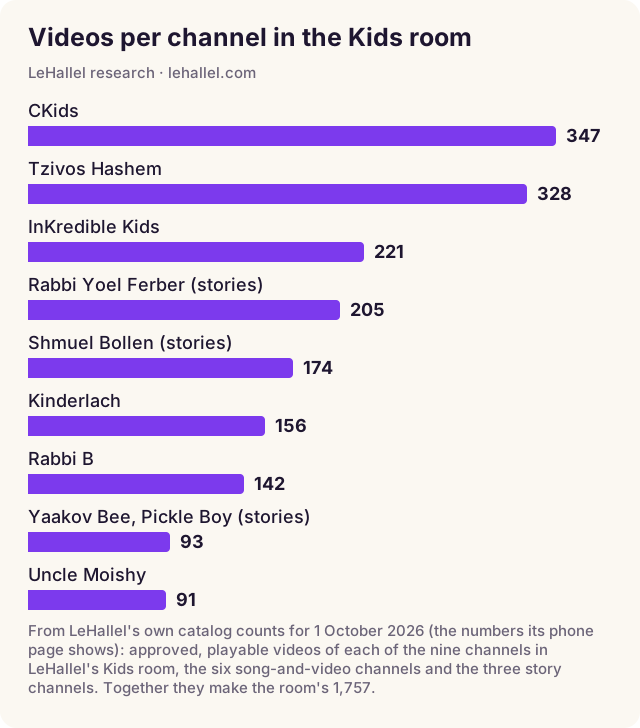
| Channel or series | What it is | In the room |
|---|---|---|
| Uncle Moishy | Songs about mitzvos and Jewish life, by "an American Jewish children's entertainer" with his band, Uncle Moishy and the Mitzvah Men (Wikipedia) | 91 videos, as 9 albums |
| Rabbi B | Songs for children, from his own channel | 142 videos |
| Kinderlach | Children's songs and clips, from Kinderlach's official channel | 156 videos |
| Tzivos Hashem | Programs from "Tzivos Hashem Jewish Children's International", established 1980 | 328 videos |
| CKids | Videos from CKids, linked with Tzivos Hashem | 347 videos |
| InKredible Kids | Stories and features about Jewish life | 221 videos |
| Pickle Boy | "The Secret Adventures of Pickle Boy", a story series by Yaakov Bee | 93 videos from Yaakov Bee; the room's card shows the 11-episode series |
| Rabbi Ferber's Stories | Stories by Rabbi Yoel Ferber, starting with Itzikel | 205 videos from Rabbi Yoel Ferber; the card shows a 10-story series |
| Shmuel Bollen's Stories | "Jewish stories for children of all ages" | 174 videos from Shmuel Bollen; the card counts 169 stories |
Stories and albums, kept in order
Children want the same story from the beginning, and the next one after it. Parents want an album to play through without the next video being chosen by something else. Pressing Uncle Moishy in the Kids room shows how LeHallel keeps that order.

Each album is a numbered set of parts with its total length, so a parent can see at a glance that The Friendship Album! is about 39 minutes, a good fit for a car ride or a rainy afternoon, and that Shh its Loshon Hora! teaches exactly what its name says. "Play from the beginning" starts the first album at its first part.
Some of what is in the room follows the Jewish year. When we scrolled All kids videos on 1 October 2026, it held CKids' "Shofar Thuderstix [sic] Instructional Video" (6:07, from late August) and Rabbi B's "Tammuz and the Summer Time" (22:02), and Uncle Moishy's albums include Pesach With Friends & Family. For the coming yom tov, the place to look is the room's own search, labeled "Kids" while you are inside.
A room, not a lock
This is the most important line in this guide: the Kids room is a room, not a lock. Inside it, everything was approved before it appears. But being in the room does not stop a child from leaving it, or from opening another app or website on the same device.
So the right way to think about a kids room is as the best first place to go. What else the device can do is a separate decision, made on the device: which apps are on it, whether it has a browser, where it is used. YouTube's own options for young children (YouTube Kids with its age settings, or videos a parent handpicks) are covered in our guide YouTube for parents.
Before a child watches alone: a checklist
Approved does not mean right for every child or every age. Before a child watches on their own, take ten minutes with this list. It is the part that only a parent can do.
- Watch the first five minutes of what they will watch first. Make sure the pace, the language and the tone fit your child.
- Check the age. A story for older children can frighten a four-year-old; a toddler song will bore a ten-year-old.
- Start from the beginning. Use Start or Play from the beginning, so a series makes sense.
- Decide how long. An album's total length is shown; agree on one album or one story, then stop.
- Know what else the device can open. A kids room on an open device is still an open device.
- Keep the screen where you can see it, especially for young children.
- Watch some together. A song a parent sings along to is worth more than ten watched alone.
Questions people ask
Where can I find kosher videos for kids?
In approved libraries built for Jewish families, and on the creators' own channels. LeHallel's Kids room held 1,757 approved videos on 1 October 2026, from story series to song channels.
Are there free Jewish videos for kids?
Yes. The creators' own channels are free to watch, and LeHallel's Kids room plays free without an account.
What Jewish videos are good for toddlers?
Short songs with simple words, like Uncle Moishy's albums about mitzvos. Watch the first few minutes together and decide by your own child.
Do I have to pre-watch every video?
Every video in the room was approved before it appears, which saves screening everything yourself. But approval is LeHallel's judgment, not yours, and LeHallel does not publish how each video is reviewed. Watch the first minutes of what your child watches first, and if anything should not be there, tell LeHallel at team@lehallel.com or 718-971-4311.
What age is the Kids room for?
It holds songs and stories made for children of different ages, from Uncle Moishy's albums for the youngest to features for older children. Watch the first minutes of a channel and decide by your own child.
Can my child watch a story series in order?
Yes. Story series start with Episode 1, and albums play as numbered parts from the beginning.
Is YouTube Kids enough for a Jewish family?
It narrows YouTube by age, and a parent can handpick videos. What it calls suitable is YouTube's judgment, not a Torah home's; many families add an approved Jewish kids room.
How much screen time should a child have?
That is a family decision. Agree on a set amount, such as one album or one story, and stop there; ask your child's school or your rav if you want guidance.
Sources
- LeHallel, the Kids room and Uncle Moishy's albums, opened in a real browser at iPhone size on 1 October 2026 (the pictures above).
- LeHallel's own catalog counts for 1 October 2026: approved videos per kids channel (the chart and table above).
- Wikipedia, Uncle Moishy (read 1 October 2026).
- Tzivos Hashem, tzivoshashem.org (read 1 October 2026): "Jewish Children's International est. 1980".
- CKids, ckids.org (read 1 October 2026).
- YouTube Help, YouTube Kids, supervised accounts and teens compared (read 1 October 2026).
- YouTube, Tzivos Hashem, CKids, Kinderlach, Rabbi B, InKredible Kids: each named by YouTube's own record of the channel's approved videos (checked 1 October 2026).
- LeHallel, FAQ (read 1 October 2026): "No card is taken anywhere on this site"; every video "plays through YouTube's official player"; "YouTube may show its own ad on some of those videos."