Jewish Music for the Year: Shabbos, Yom Tov, Sefira, Simchas and Nigunim
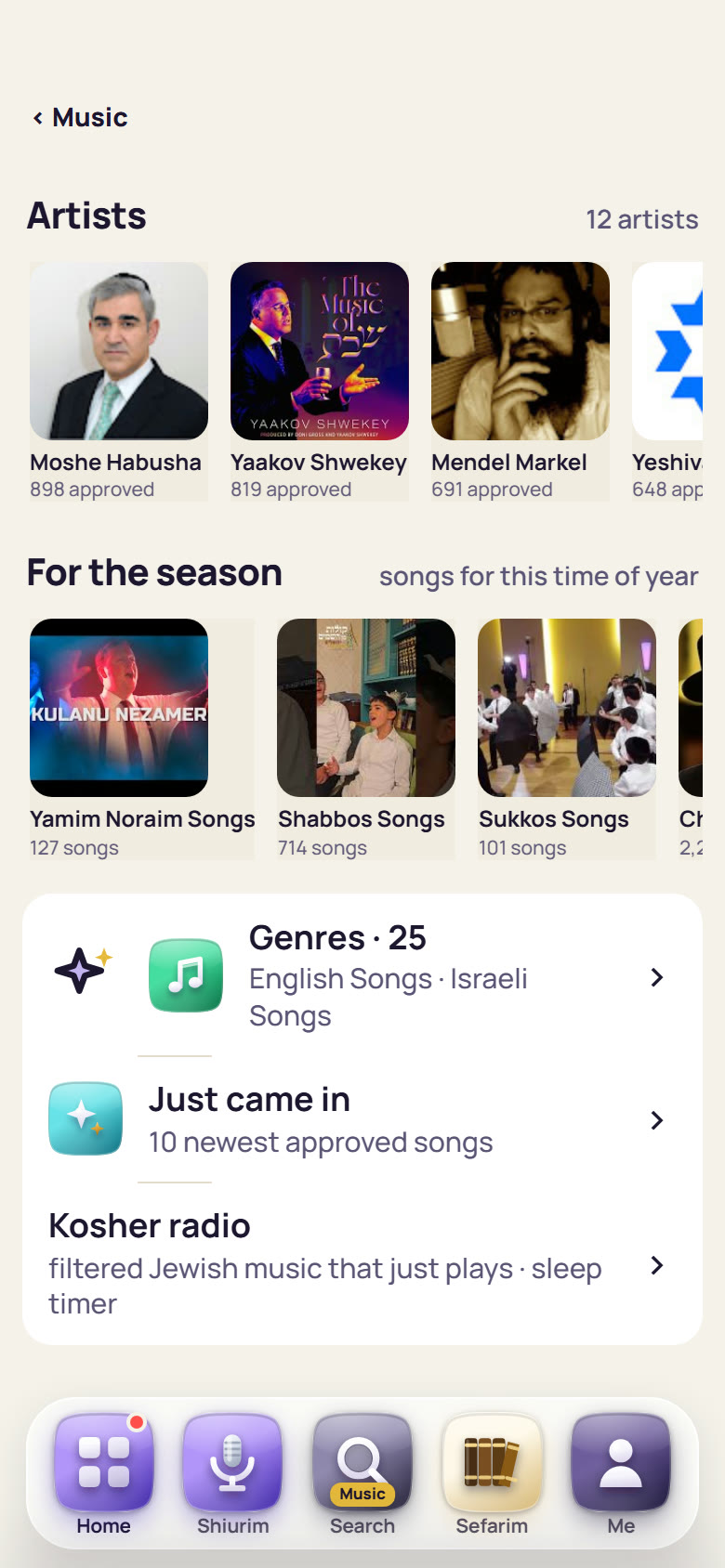
Jewish music follows the calendar: zemiros for Shabbos, niggunim for a kumzitz, freilach songs for Purim and simchas, and, for many families, voices only (acapella) during Sefira and the Three Weeks. On LeHallel on 1 October 2026 the deep shelves were Chassidishe nigunim (2,256), Shabbos songs (714) and acapella (364); the yom tov shelves are small, often one artist's. Below: the year in 5787, season by season, with real songs for each.
The year in 5787, with its music
Today is Tuesday 6 October 2026, 25 Tishrei 5787. Coming up in the music year: Chanukah (the first candle) on 4 December 2026 (in 59 days), then Tu BiShvat on 23 January 2027 (in 109 days), then Purim on 23 March 2027 (in 168 days).
Here is the Jewish year ahead with the music that usually goes with each season. The dates are from Hebcal's calendar for outside Eretz Yisrael. Customs differ between communities and families; where a season carries restrictions on music, ask your rav what applies to you.
| Season | When (5787) | What people play | On LeHallel, for example (1 October 2026) |
|---|---|---|---|
| Sukkos and Simchas Torah | Through 4 October 2026 | Simchas beis hashoeivah songs, dancing music for hakafos | "Hoshana" by MD Schwartz; dancing music shelf 1,259 |
| Every Shabbos | Every week | Zemiros learned during the week for the table | "Ah Gutten Shabbos" by MD Schwartz; Avraham Fried's "Shalom Aleichem" (live, 2019) |
| Chanukah | First candle the evening of 4 December 2026; 8th day 12 December | Chanukah songs, Maoz Tzur | the Maccabeats' "Miracle"; Yossi Desser's "Dreidelech", Yiddish Chanukah songs |
| Purim | 23 March 2027 (Shushan Purim 24 March) | Freilach and funny songs | Yirmi G's "Umordechai Yatsah"; the Maccabeats' "Purim Song" |
| Pesach | 22 to 29 April 2027 | Seder songs, Hallel | the Maccabeats' "Dayenu" |
| Sefira | From the second night of Pesach to Shavuos (11 June 2027); Lag BaOmer 25 May | For many, voices only | Acapella 364 |
| The Three Weeks | 17 Tammuz (22 July 2027) to Tisha B'Av (12 August) | For many, voices only, or none at all | Acapella 364 |
| Elul and the Yamim Noraim | Rosh Hashana 5788 on 2 October 2027 | Tefillos set to melody, chazzanus | Chaim Dovid Berson's "Simple Nusach for Challenging Times" (Shacharis for Rosh Hashana); Yirmi G's "Avinu Malkeinu (Traditional)" |
| Any time | All year | Nigunim, Carlebach, quiet music | Motty Steinmetz's "Tseno Ureno"; Eitan Katz's "L'maancha" (live in Jerusalem) |
Sukkos and Simchas Torah
In 5787 Shmini Atzeres fell on Shabbos 3 October 2026 and, outside Eretz Yisrael, Simchas Torah on Sunday 4 October: the most joyful dancing of the year, with the Torah in the middle of the circle.
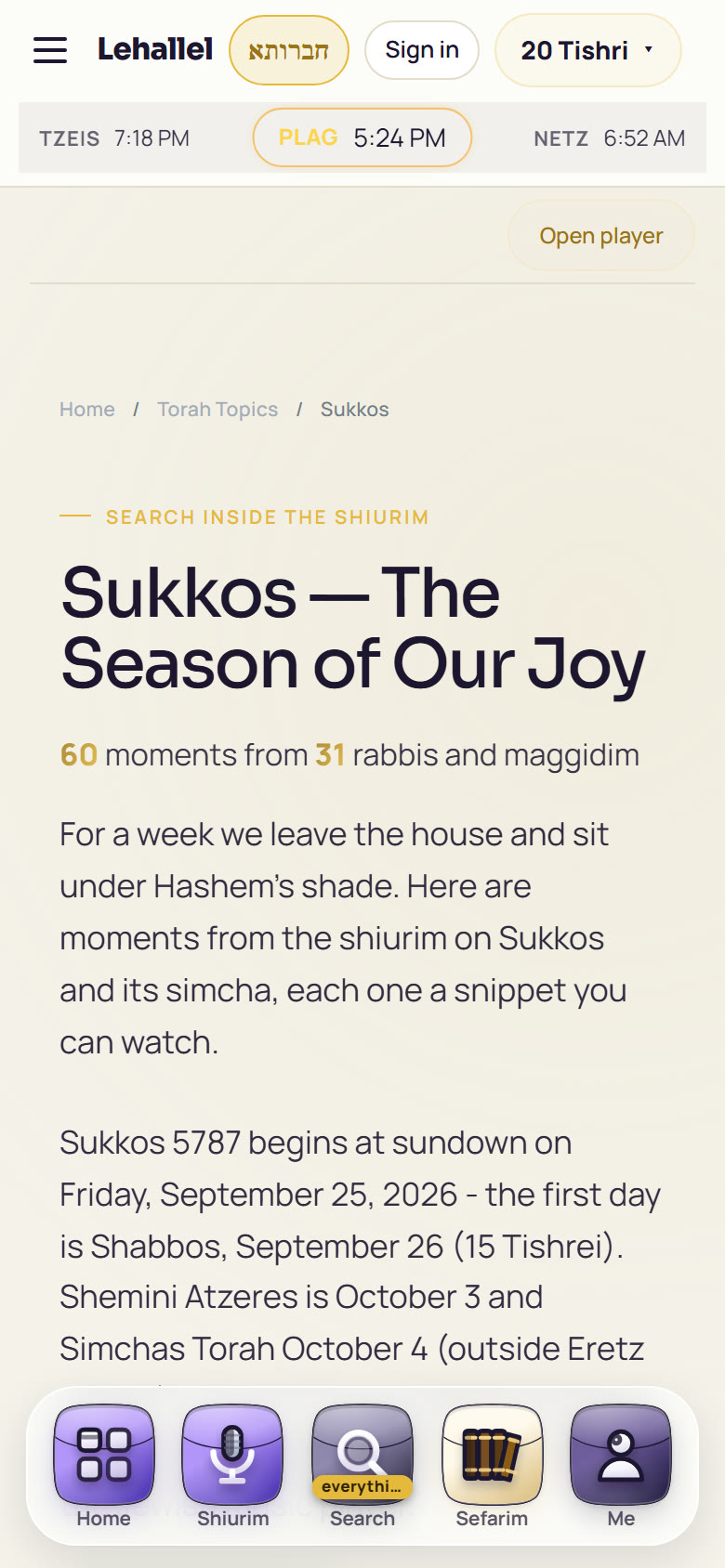
LeHallel's Sukkos page puts the music beside the learning: "For the Yom Tov table the library also holds 101 approved Sukkos songs." For the yom tov itself there is "Hoshana" by MD Schwartz; for hakafos, the dancing music shelf (1,259 approved songs). A word of honesty about the "Sukkos Songs" shelf: of its 101 songs, 76 are by one artist, Gobbie Cohn, so the dancing shelf is often the better place to look. And because a yom tov week is when grandparents, children and guests all sit at one table, it is a good week to learn one new song together before yom tov begins.
Every week: Shabbos
Shabbos is the one season that comes every week. In observant homes, Shabbos music is sung, not played: zemiros around the table, often the tunes parents learned from their own parents. Recorded music has a different job: teaching the songs during the week, so that on Friday night the whole table knows the tune.
LeHallel's Shabbos songs shelf held 714 approved songs from 70 artists on 1 October 2026; two to start with are "Ah Gutten Shabbos" by MD Schwartz and Avraham Fried's "Shalom Aleichem" (live, 2019). A simple habit: pick one zemer on Sunday, play it in the car through the week, and sing it on Friday night. By the end of a year that is fifty songs a family knows together.
Nigunim and the kumzitz
A nigun needs no season. Wikipedia describes it as "a form of Ashkenazi Jewish vocal music sung in group settings," often with "repetitive non-lexical vocables such as 'bim-bim-bam'... rather than with formal lyrics." That is why so many people search for "Jewish music without words": they are looking for nigunim.
The Chassidishe nigunim shelf is one of LeHallel's largest: 2,256 approved songs from 69 artists on 1 October 2026. Two of the most played there are Motty Steinmetz's "Tseno Ureno" and Avraham Fried's "Shalom Aleichem". Beside it sit Carlebach songs (197), the melodies of Rabbi Shlomo Carlebach, sung there mostly by Eitan Katz (134 of them), such as Eitan Katz's "L'maancha" (live in Jerusalem), and a small relaxing music shelf (175) for the end of a long day.
A kumzitz, an evening of slow songs sung together, is the nigun's natural home. Many families keep a short list of three or four slow songs for a Shabbos afternoon or a Motzei Shabbos with guests.
Chanukah and Purim
Chanukah begins with the first candle on the evening of 4 December 2026, and the eighth day is 12 December. LeHallel's "Chanukah Songs" shelf (53) is one singer's: all of Yossi Desser's songs, among them Yossi Desser's "Dreidelech", Yiddish Chanukah songs. For more, the Maccabeats' "Miracle" and two other Chanukah songs by the Maccabeats sit on the acapella shelf. Listen through them before the first night and choose a few the children will sing at the menorah.
Purim falls on Tuesday 23 March 2027 (Shushan Purim, in walled cities such as Yerushalayim, on 24 March). It is the year's most freilach day. LeHallel's "Purim Songs" shelf (59) is likewise one singer's, Yirmi G, and its best fit is Yirmi G's "Umordechai Yatsah", which its own title calls an "Upbeat, Lively song for Purim!"; the Maccabeats' "Purim Song" is on the acapella shelf. Many families add the dancing shelf for the seudah.
Sefira and the Three Weeks: the quiet seasons
Two stretches of the year carry customs of mourning, and with them, customs about music.
Sefira, the 49 days counted from Pesach to Shavuos, includes a period of mourning, and communities observe different parts of it. Wikipedia sums up the general custom: "During the days of mourning, custom generally forbids haircuts, shaving, listening to live music, or conducting weddings, parties, and dinners with dancing." In 5787 Pesach begins 22 April, Lag BaOmer is 25 May and Shavuos is 11 June 2027.
The Three Weeks run from the fast of 17 Tammuz to Tisha B'Av: 22 July to 12 August 2027. Wikipedia describes the "Standard Ashkenazic custom" as one that "restricts the extent to which one may take a haircut, shave or listen to music with instruments," adding that "communities and individuals vary their levels of observance of these customs."
In both seasons many families who keep these customs listen to acapella, voices only, and that is what the acapella shelf (364 approved songs) is for. Most of it comes from a few groups and singers: Yonatan Stern (96), the Maccabeats (82) and Six13 (67). Whether recorded music, even acapella, is right for your home in these weeks, and from which day, is a question for your rav. We describe the custom; we do not decide it.
Simchas: weddings and bar mitzvahs
A simcha has its own music: the songs the band will play, the slow song under the chuppah, the dancing after. Families planning a simcha often want to hear the songs first. LeHallel's weddings and events shelf held 271 approved songs from 41 artists on 1 October 2026, and the dancing music shelf another 1,259. Two to listen to: "Od Yishama" by the Key Tov Orchestra, and Ari Fraser's "Im Eshkachech" sung live at a chuppah. For the chuppah itself, many couples choose a slow song or a nigun; the nigunim shelf is a good place to listen for one.
What the library holds for each season
Here is the whole picture from LeHallel's own counts for 1 October 2026: the seasonal and occasion shelves side by side.
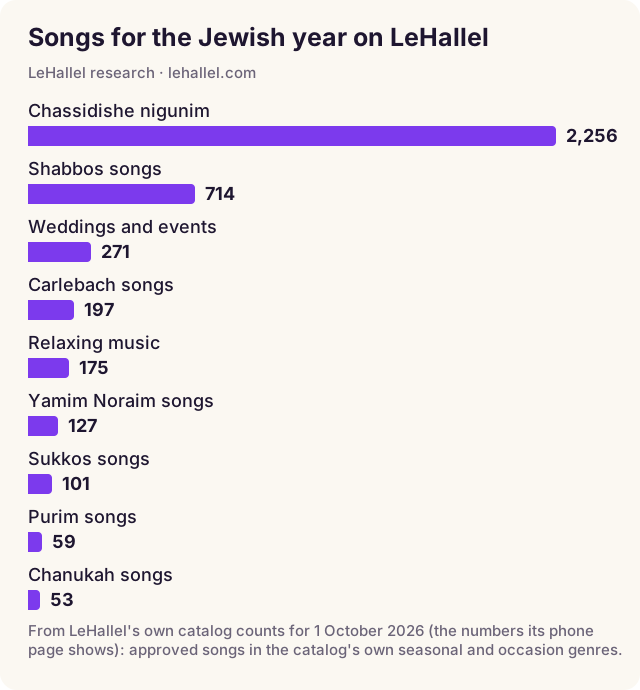
Read it honestly. The everyday shelves (nigunim, Shabbos) are deep. The yom tov shelves are small, and some are filed by artist rather than song by song: on 1 October 2026 the Chanukah shelf was Yossi Desser's 53 songs, the Purim shelf Yirmi G's 59 and the Yamim Noraim shelf Chaim Dovid Berson's 127, so each also holds songs for other times. That is why this guide names real songs for each season. For a particular song, search for it by name.
- A week before each yom tov, open that season's shelf and pick three songs to learn as a family.
- Every Sunday, pick one Shabbos zemer for the week.
- Before Sefira and the Three Weeks, ask your rav what your home keeps, then set the music to match.
- For a simcha, listen to the weddings and dancing shelves together and choose the chuppah song early.
- Any evening, a nigun is always in season.
Questions people ask
What Jewish music is played on Shabbos?
Most families sing zemiros at the table rather than play music. Recorded Shabbos songs are for learning the tunes during the week; LeHallel's Shabbos shelf held 714 approved songs.
Can you listen to music during Sefira?
Custom generally restricts music during the mourning days of Sefira, and many families listen only to acapella. Communities differ about which days; ask your rav.
Can you listen to music during the Three Weeks?
Standard Ashkenazic custom restricts music with instruments from 17 Tammuz to Tisha B'Av (22 July to 12 August 2027). Many listen to acapella; ask your rav what your home keeps.
What is acapella Jewish music?
Music sung with voices only, no instruments. Many families use it in Sefira and the Three Weeks. LeHallel held 364 approved acapella songs on 1 October 2026.
What are nigunim?
Melodies, often without words, sung together. LeHallel's Chassidishe nigunim shelf held 2,256 approved songs.
When is Chanukah in 2026?
The first candle is lit on the evening of 4 December 2026, and the eighth day is 12 December, according to Hebcal.
Where can I find music for Simchas Torah?
Dancing music for hakafos: LeHallel's dancing shelf held 1,259 approved songs, and its Sukkos shelf 101.
What music is good for a wedding chuppah?
Many couples choose a slow song or a nigun. Listen through a weddings shelf and a nigunim shelf together, and choose early.
Sources
- Hebcal, Jewish holidays (read 1 October 2026): the dates of Chanukah, Purim, Pesach, Lag BaOmer, Shavuos, 17 Tammuz, Tisha B'Av and Rosh Hashana 5788.
- Hebcal, Sukkot 2026 and Simchat Torah 2026 (read 1 October 2026).
- Wikipedia, Counting of the Omer (read 1 October 2026).
- Wikipedia, The Three Weeks (read 1 October 2026).
- Wikipedia, Nigun (read 1 October 2026).
- LeHallel, Everything in Music, For the season, and Sukkos — The Season of Our Joy, opened in a real browser at iPhone size on 1 October 2026 (the pictures above).
- LeHallel's own catalog counts for 1 October 2026: approved songs per seasonal and occasion genre, and artists per genre (the chart and the table above).
- LeHallel, FAQ (read 1 October 2026): "No card is taken anywhere on this site"; every video "plays through YouTube's official player"; "YouTube may show its own ad on some of those videos."
- LeHallel, the song pages linked above (for example, "Hoshana"), each opened 1 October 2026; and LeHallel's own catalog counts for the artists filed under each seasonal shelf.