The weekly parsha, from the inside
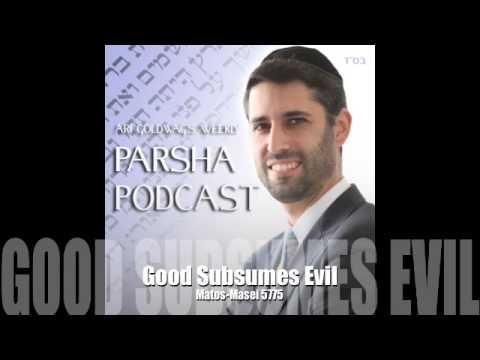
Rabbi Ari Goldwag's shiurim follow the weekly parsha, but with a consistent inward focus. The titles tell the story — "Emor: Serving Hashem with Simplicity," "Parashat Naso: Serving Hashem Intuitively," "Parashat Shemini: Accessing the Transcendent." Rather than dwelling on the mechanics of the text, Goldwag mines the parsha for insight into avodas Hashem — how a person actually serves and relates to the Divine. Each week's reading becomes a prompt for the inner work of the spiritual life.
This gives his parsha series a distinctive character. Many parsha shiurim aim at pshat or at a sharp lomdishe question; Goldwag's aim more often at the heart — at simplicity, intuition, and reaching beyond the material world. "Behar-Bechukotai: Giving It Back to Hashem" and "Acharei Mot-Kedoshim: Balancing Spiritual and Physical" show the pattern, turning the parsha toward the listener's own relationship with Hashem. It is Torah study pointed at growth as much as knowledge.
A musician's ear
Goldwag is also well known in the world of Jewish music, as a composer and singer whose songs are widely sung. That background is not separate from his Torah; the same sensibility runs through both. Music reaches for what words alone cannot say — the emotional, the transcendent, the yearning of the soul — and Goldwag's shiurim reach in the same direction. A title like "Accessing the Transcendent" could describe a niggun as easily as a dvar Torah.
This helps explain why his teaching leans toward the experiential side of Yiddishkeit. Someone attuned to melody tends to be attuned to feeling, to the parts of avodas Hashem that live below the level of argument. His parsha insights often work this way — less about winning a point than about opening a heart. For listeners who connect to Torah through emotion and inspiration as much as analysis, that resonance is a real draw.
Facing the spiritual challenges of life
The collection does not shy away from difficulty. "Parashat Tazria-Metzora: Facing Spiritual Sickness" takes a hard parsha and reads it as a lens on the soul's ailments and their repair. This willingness to treat the harder parshiyos as mirrors for inner struggle is part of what makes the series useful — it does not only celebrate the heights but addresses the low points, offering a Torah framework for the times a person feels distant or stuck.
Alongside the parsha, the library reaches into Jewish thought, the festivals, and Gemara, but the unifying thread is the pursuit of a closer, more genuine relationship with Hashem. For a family or an individual drawn to the inner, inspirational side of Torah — and perhaps already familiar with Goldwag's music — his shiurim offer a way to bring that same spirit into the study of the weekly parsha and the rhythm of the Jewish year.
Finding kosher Torah video for your family
Lehallel is a kosher video service built for Jewish families — every single video is approved against one written standard before it can appear, with no open feed, no comments, and no surprises. It is a calm, safe place to look for the Torah and Jewish music you love.
If your family enjoys teachers like Rabbi Ari Goldwag, search Lehallel for the speakers and topics that matter most to you. With a daf yomi shelf, a weekly parsha shelf, topic shelves, audio-only listening for the car, and a kids mode with a PIN, kosher Jewish video is easy to reach — and the approved catalog keeps growing every day.
Watch on Lehallel
Real, approved videos from Parsha Podcast with Ari Goldwag — tap any card and it plays filtered, with nothing unapproved around it.



At a glance
Key takeaways
- Rabbi Ari Goldwag teaches the weekly parsha with a focus on avodas Hashem and the inner spiritual life.
- He is also a well-known Jewish music composer and singer, and that sensibility runs through his Torah.
- Titles like "Serving Hashem with Simplicity" and "Accessing the Transcendent" show his experiential bent.
- Harder parshiyos, like Tazria-Metzora, become lenses on the soul's struggles and repair.
- Search Lehallel for kosher, approved Torah video — the catalog grows every day.
Watch this now
Don’t just read about it — watch it
Every video is reviewed against one written standard before it can play.